
Choosing an industrial hose reel is about more than selecting a reel based on hose size or price. The right reel needs to match the hose, fluid, pressure, temperature, operating environment, mounting location and method of use.
The right industrial hose reel is one that is designed around the actual requirements of the application.
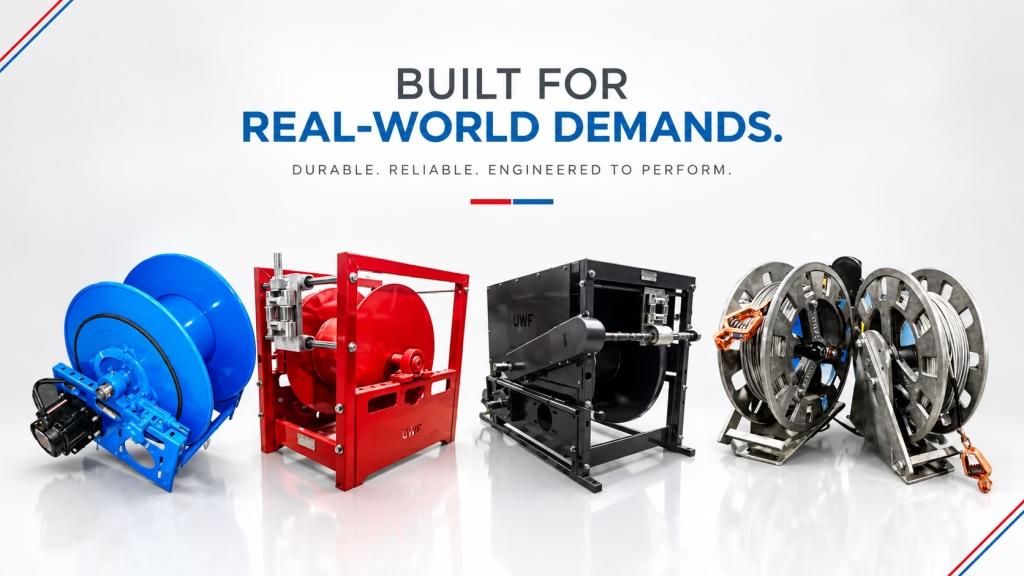
For some applications, a standard reel may provide everything needed. For others, a custom hose reel may be necessary to accommodate unusual hose dimensions, mounting restrictions, high pressures, specialized fluids, specific connection requirements or unique operating conditions.
With multiple reel configurations available—including hand crank, spring rewind, air, hydraulic and electric reels—it is important to understand the factors that should be considered before selecting equipment.
This guide outlines the key questions to ask when choosing an industrial hose reel.
What Is an Industrial Hose Reel?
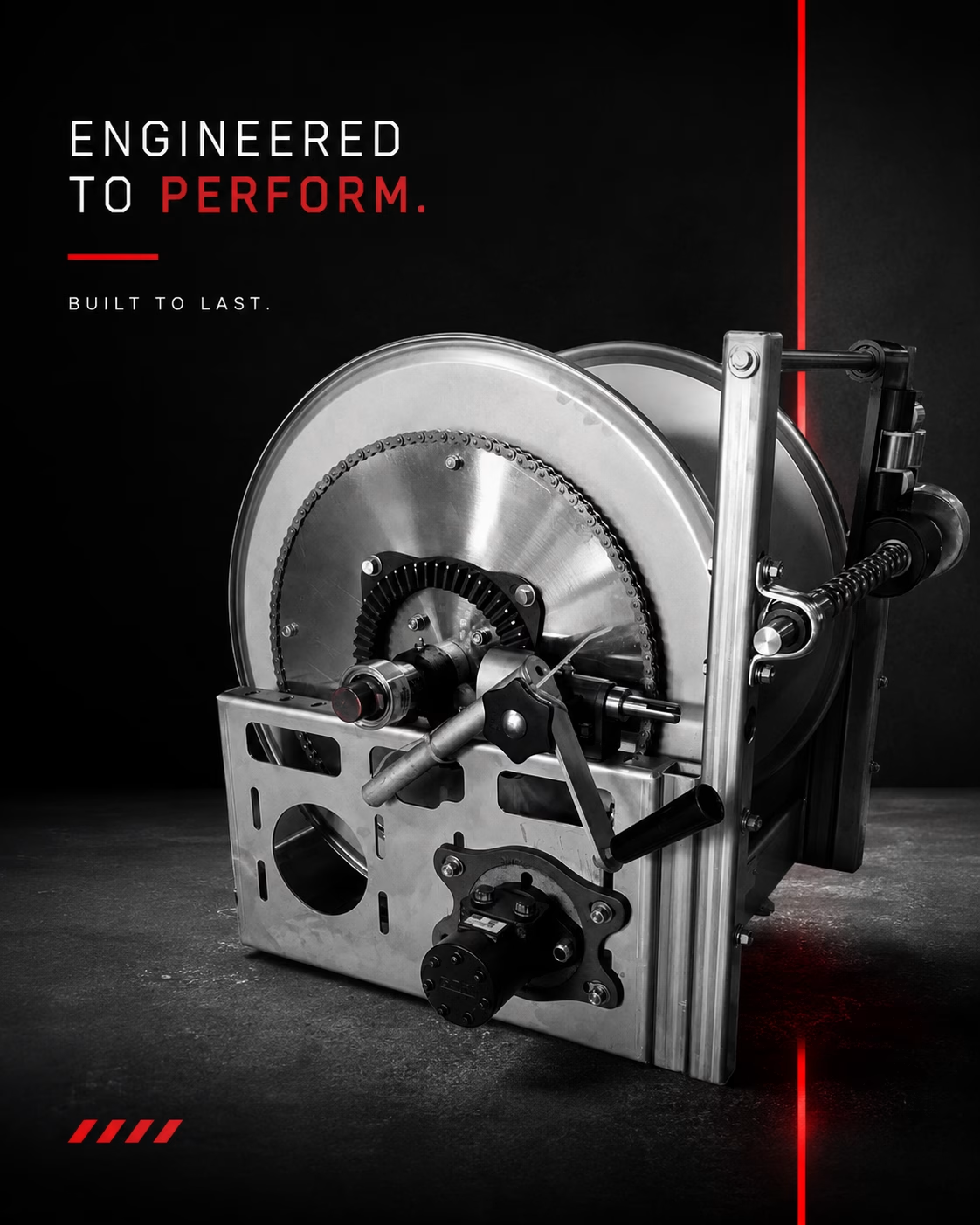
An industrial hose reel is a mechanical device designed to store, organize and deploy a hose.
Rather than leaving a hose loosely coiled on the floor or equipment, a reel provides a controlled method of storing the hose when it is not being used and deploying it when required.
Depending on the application, the reel can be manually operated or equipped with a powered rewind system.
Industrial hose reels are used in applications such as:
- Fuel delivery
- Aviation servicing
- Industrial maintenance
- Fire and rescue
- Water transfer
- Lawn care
- Tanker operations
- Sewer jetting
- Manufacturing
- Petroleum handling
- Specialized fluid transfer
The design of the reel can vary significantly depending on the application.
What Should You Consider When Choosing an Industrial Hose Reel?
There are several important specifications to establish before selecting a reel.
The most important include:
- Hose size
- Hose length
- Fluid being handled
- Operating pressure
- Operating temperature
- Rewind method
- Mounting location
- Available space
- Operating environment
- Required connections
- Frequency of use
- Customization requirements
Looking at these requirements together is much more useful than choosing a reel based on a single specification.
1. What Hose Size Are You Using?
Hose size is one of the first specifications to establish.
The hose’s inside diameter affects the fluid flow through the system, while its outside diameter and construction can affect how much hose the reel can accommodate.
Industrial hose reels may be designed around different fluid-path sizes, with configurations available for applications ranging from smaller transfer hoses to larger industrial hoses.
The hose should therefore be identified before the reel is selected.
Important information can include:
- Inside diameter
- Outside diameter
- Overall hose length
- Hose construction
- Minimum bend radius
- Weight of the hose
A reel needs to accommodate the physical characteristics of the hose—not just its nominal size.
2. How Much Hose Does the Reel Need to Hold?
Hose length is another important consideration.
A reel designed for 50 feet of hose may not be appropriate if the application requires significantly more hose.
The required hose length should be determined based on the distance the operator needs to reach from the reel to the connection point.
At the same time, adding excessive hose length can increase reel size, weight and overall installation requirements.
The goal is to determine the actual working length required by the application.
Hose Storage Capacity Matters
The reel must have sufficient capacity for the selected hose.
Hose diameter, length and winding arrangement all affect the required reel dimensions.
This is particularly important for larger industrial hoses, where the physical size and weight of the hose can become significant.
3. What Fluid Will Be Handled?
The fluid being transferred is another major factor in reel selection.
A reel used for water may have very different material and compatibility requirements from a reel used for petroleum products, aviation fuel or other industrial fluids.
The fluid should therefore be identified before specifying the reel.
Consider:
- Fluid type
- Chemical compatibility
- Temperature
- Pressure
- Material compatibility
- Hose construction
- Seal and connection requirements
The reel itself is only one part of the overall system. The hose, fittings, swivel and other fluid-path components also need to be appropriate for the application.
4. What Pressure Does the Application Require?
Pressure rating is one of the most important specifications when selecting a hose reel.
The operating pressure of the application needs to be considered alongside the pressure ratings of the hose, reel fluid path, fittings, swivel and other components.
A reel should not simply be selected because the hose fits.
The entire fluid path needs to be evaluated.
For example, specialized high-pressure applications such as sewer jetting can require substantially different reel designs from standard water or maintenance applications.
UHR manufactures custom high-pressure hose reel solutions for demanding applications, including sewer jetter applications requiring configurations rated for pressures up to 40,000 PSI.
Operating Pressure vs. Maximum Pressure
It is also important to distinguish between the normal operating pressure and the maximum rated pressure of equipment.
Equipment should be specified based on the actual application requirements and appropriate engineering and safety considerations rather than selecting equipment solely because its maximum rating appears sufficient.
5. What Temperature Will the Reel Experience?
Temperature can affect the hose, seals, fittings and other components within the fluid path.
Consider both:
- Ambient temperature
- Temperature of the fluid being transferred
For example, a hose reel used outdoors in a Canadian environment can experience very different ambient conditions from a reel operating inside a controlled industrial facility.
Similarly, a reel handling a hot product may require materials and components appropriate for elevated temperatures.
Temperature should therefore be established early in the specification process.
6. How Should the Hose Reel Be Rewound?
One of the biggest decisions when selecting an industrial hose reel is the rewind method.
Common options include:
Hand Crank Hose Reels
A hand crank reel is manually operated.
These reels can be useful when:
- Power is unavailable
- Simple operation is preferred
- Hose usage is moderate
- Manual control is desirable
Spring Rewind Hose Reels
Spring rewind reels use a spring mechanism to assist with hose retrieval.
They can provide convenient operation without requiring an external power source.
Spring rewind configurations are commonly used where controlled hose retrieval and relatively simple operation are required.
Air Rewind Hose Reels
Air-powered reels use compressed air to operate the rewind mechanism.
These can be useful in environments where compressed air is readily available or where electrical equipment is not preferred for the application.
Hydraulic Hose Reels
Hydraulic rewind systems can provide powered operation for demanding industrial applications.
They may be appropriate where hydraulic power is already available on the equipment or vehicle.
Electric Hose Reels
Electric reels use an electric motor to power hose rewind.
They can be useful where electrical power is available and convenient powered operation is required.
Which Rewind System Should You Choose?
There is no single rewind system that is right for every application.
The decision should consider:
- Available power
- Hose weight
- Hose length
- Frequency of operation
- Installation environment
- Operator requirements
- Available space
- Existing equipment
The rewind mechanism should be selected as part of the overall system rather than as an isolated feature.
7. Where Will the Hose Reel Be Mounted?
Mounting location can have a major impact on reel design.
A reel may be mounted on:
- A truck
- Trailer
- Tanker
- Service vehicle
- Industrial equipment
- Wall
- Floor
- Fixed structure
- Specialized machinery
Before selecting a reel, determine:
- Available mounting space
- Mounting orientation
- Required mounting points
- Hose routing
- Operator access
- Clearance requirements
- Service access
A reel that fits the hose specifications may still be unsuitable if it cannot be properly installed in the available space.
8. What Material Should the Reel Be Made From?
Material selection depends on the operating environment and application.
Common considerations include:
- Carbon steel
- Stainless steel
- Aluminum
- Corrosion-resistant finishes
- Environmental exposure
For applications involving moisture, chemicals, outdoor exposure or corrosive environments, material selection can become particularly important.
Stainless steel hose reels, for example, may be appropriate where corrosion resistance and durability are important considerations.
The correct material should be selected based on the actual operating environment rather than appearance alone.
9. What Connections Are Required?
Connections are sometimes overlooked during reel selection.
The reel needs to integrate with the rest of the fluid-handling system.
Important specifications can include:
- Inlet connection
- Outlet connection
- Thread type
- Flange configuration
- Coupling requirements
- Hose connection
- Swivel requirements
Connection requirements should be established early in the design process.
This can prevent situations where the reel itself is suitable but requires additional adapters or modifications to connect it to the existing system.
10. What Environment Will the Reel Operate In?
Consider the conditions surrounding the reel.
Will it be:
- Indoors?
- Outdoors?
- Mounted on a vehicle?
- Exposed to rain or snow?
- Exposed to chemicals?
- Exposed to extreme temperatures?
- Used in a washdown environment?
- Used around petroleum products?
- Used in a high-cycle industrial environment?
The environment can affect material selection, finish, components and overall reel design.
11. How Frequently Will the Reel Be Used?
Usage frequency should also influence reel selection.
A reel used occasionally may have different requirements from one deployed continuously throughout a working day.
Consider:
- Number of cycles
- Hose weight
- Rewind frequency
- Operator involvement
- Duty cycle
- Maintenance requirements
For demanding applications, the reel should be designed with the expected workload in mind.
12. Do You Need a Standard or Custom Hose Reel?
This is often the most important question.
A standard hose reel can be an effective solution when the application falls within common specifications.
However, customization may be appropriate when the application has requirements that standard equipment cannot accommodate.
Consider a Custom Hose Reel When You Have:
- Unusual mounting requirements
- Limited installation space
- Large or specialized hoses
- High-pressure requirements
- Specialized fluids
- Unusual hose lengths
- Multiple fluid paths
- Specific connection requirements
- Specialized rewind requirements
- Unique operating conditions
Custom manufacturing allows the reel to be developed around the application.
What Does a Custom Hose Reel Involve?
Custom does not necessarily mean starting from scratch.
A manufacturer can begin with the application’s requirements and determine which elements of the reel need to be modified or engineered.
This can involve:
Engineering
Understanding the application and establishing the required specifications.
CAD Design
Developing the reel design around dimensions, mounting requirements and fluid-path requirements.
Machining
Manufacturing components to the required dimensions and tolerances.
Welding and Fabrication
Producing structural components and assemblies according to the design.
Assembly
Combining the reel, fluid-path components, drive system and other components.
Finishing
Applying the appropriate finish or material treatment for the operating environment.
The result is a reel designed around the requirements of the application rather than a generic configuration.
A Practical Hose Reel Specification Checklist
Before contacting a hose reel manufacturer, gather the following information.
Hose
- Inside diameter
- Outside diameter
- Length
- Weight
- Minimum bend radius
- Hose type
Fluid
- Fluid/product
- Compatibility requirements
- Temperature
Pressure
- Normal operating pressure
- Required pressure rating
Reel
- Required capacity
- Fluid path size
- Rewind method
- Rotation requirements
- Mounting orientation
Installation
- Available space
- Mounting location
- Mounting points
- Hose routing
- Operator access
Connections
- Inlet
- Outlet
- Thread
- Flange
- Coupling
- Swivel
Environment
- Indoor/outdoor
- Temperature
- Moisture
- Corrosive exposure
- Vehicle-mounted or stationary
Operation
- Manual
- Electric
- Hydraulic
- Air
- Spring rewind
Having this information available can make the design and quotation process much more efficient.
Why Work With a Custom Hose Reel Manufacturer?
The advantage of working directly with a manufacturer is the ability to discuss the application rather than simply selecting a product from a catalog.
At Unique Hose Reels, hose reels are manufactured for a wide range of industrial applications, with custom configurations available to address specific customer requirements.
Unique Welding & Fabricating brings together engineering, CAD, welding, machining and fabrication capabilities, allowing specialized hose reel requirements to be evaluated from the design stage through manufacturing.
This can be particularly valuable when the application does not fit a standard reel configuration.
A custom manufacturer can look at the complete requirement:
Hose → Fluid → Pressure → Temperature → Mounting → Operation → Connections → Environment
and use those requirements to develop an appropriate reel configuration.
Frequently Asked Questions
What is the most important factor when choosing an industrial hose reel?
There is no single specification that determines the correct reel. Hose size, length, fluid, pressure, temperature, rewind method, mounting location and operating environment should all be considered together.
How do I know what size hose reel I need?
The reel size depends on the hose’s diameter, length, weight, bend radius and required storage capacity. The available mounting space and required fluid path should also be considered.
Are industrial hose reels available with automatic rewind?
Yes. Depending on the application, automatic or powered rewind can be provided through spring, electric, hydraulic or air-operated configurations.
When should I use a custom hose reel?
A custom hose reel should be considered when standard equipment does not meet the application’s mounting, hose, pressure, fluid, connection, space or operating requirements.
Can a hose reel handle high-pressure applications?
Yes, but the reel must be specifically designed and rated for the required application. High-pressure systems require consideration of the complete fluid path, including the hose, reel, fittings, swivel and connections.
What type of hose reel is best for fuel applications?
The appropriate reel depends on the fuel or petroleum product, hose specifications, pressure, temperature, operating environment and mounting requirements. The complete fluid path should be specified for the application.
Can hose reels be made from stainless steel?
Yes. Stainless steel can be used for hose reel construction when the application requires corrosion resistance or specific material characteristics.
Can an industrial hose reel be designed to fit existing equipment?
Yes. Custom hose reels can be designed around specific mounting locations, available space, hose routing, connections and existing equipment requirements.
Choosing the Right Reel Starts With the Application
The best hose reel is not necessarily the largest, most powerful or most heavily featured option.
It is the reel that is properly matched to the application.
Before selecting a hose reel, define the hose, fluid, pressure, temperature, mounting location, rewind method, connections and operating environment.
When a standard configuration meets those requirements, it may be the right solution.
When it does not, a custom hose reel can provide a way to design the equipment around the actual application.
At Unique Hose Reels and Unique Welding & Fabricating, our approach is built around understanding those requirements and manufacturing practical solutions for demanding industrial applications.
The right hose reel starts with the right specifications.
If your application has requirements that don’t fit a standard reel, talk to a manufacturer about a custom solution.