
Ever wondered what goes into building a hose reel from the ground up? It starts long before the first piece of metal is cut.
Welcome back to the Unique Hose Reels blog! This time, we’re taking a closer look behind the scenes at what goes into designing and manufacturing a custom industrial hose reel.
Not every industrial application can be accommodated by an off-the-shelf product. Different hose sizes, operating pressures, fluid requirements, mounting restrictions and working environments often call for something more specialized.
That’s where custom manufacturing makes a difference.
Custom industrial hose reels are designed and manufactured around the specific requirements of an application, allowing the dimensions, materials, fluid path, mounting arrangement and rewind mechanism to be configured to meet the customer’s needs.
From the initial application review and engineering process to machining, welding, fabrication and assembly, every stage contributes to the final product.
At Unique Hose Reels (UHR) and Unique Welding & Fabricating (UWF), custom manufacturing is at the heart of what we do. Since 2006, we’ve been providing hose reel solutions designed to address the real-world requirements of industrial operations.
So, what actually goes into manufacturing a custom hose reel?
Let’s take a look.
1. Understanding the Application: Where Every Custom Reel Begins
Before manufacturing begins, the most important step is understanding what the hose reel needs to accomplish.
A hose reel designed for fuel delivery will have different requirements from one used for sewer jetting, aviation servicing, industrial maintenance or water transfer.
Rather than starting with a standard product and trying to make it fit, custom manufacturing starts by evaluating the application.
Some of the first questions we consider include:
- What fluid will the reel handle?
- What hose diameter and length are required?
- What operating pressure is needed?
- What temperature range will the equipment experience?
- How will the reel be mounted?
- What rewind mechanism is required?
- What connections and fittings are needed?
- How frequently will the reel be operated?
- Are there space or dimensional restrictions?
These specifications help establish the foundation for the design.
The more accurately the application is understood, the better the opportunity to develop equipment that fits the customer’s actual requirements.
2. Engineering and Design: Turning Requirements Into a Solution
Once the application requirements are established, the next step is engineering the reel.
This is where the individual specifications begin to come together into a practical design.
The reel needs to accommodate the hose, provide the appropriate fluid path, support the required rewind mechanism and fit within the available installation space.
Depending on the application, engineering considerations can include:
- Overall reel dimensions
- Drum diameter and width
- Frame and structural design
- Shaft and bearing arrangements
- Fluid-path configuration
- Swivel and connection requirements
- Mounting locations
- Rewind mechanism
- Hose routing and clearance
Every component needs to be considered in relation to the complete assembly.
For example, increasing hose length or diameter can affect drum dimensions, overall reel weight and the mechanical requirements of the rewind system.
These are the types of considerations that make engineering an important part of custom hose reel manufacturing.
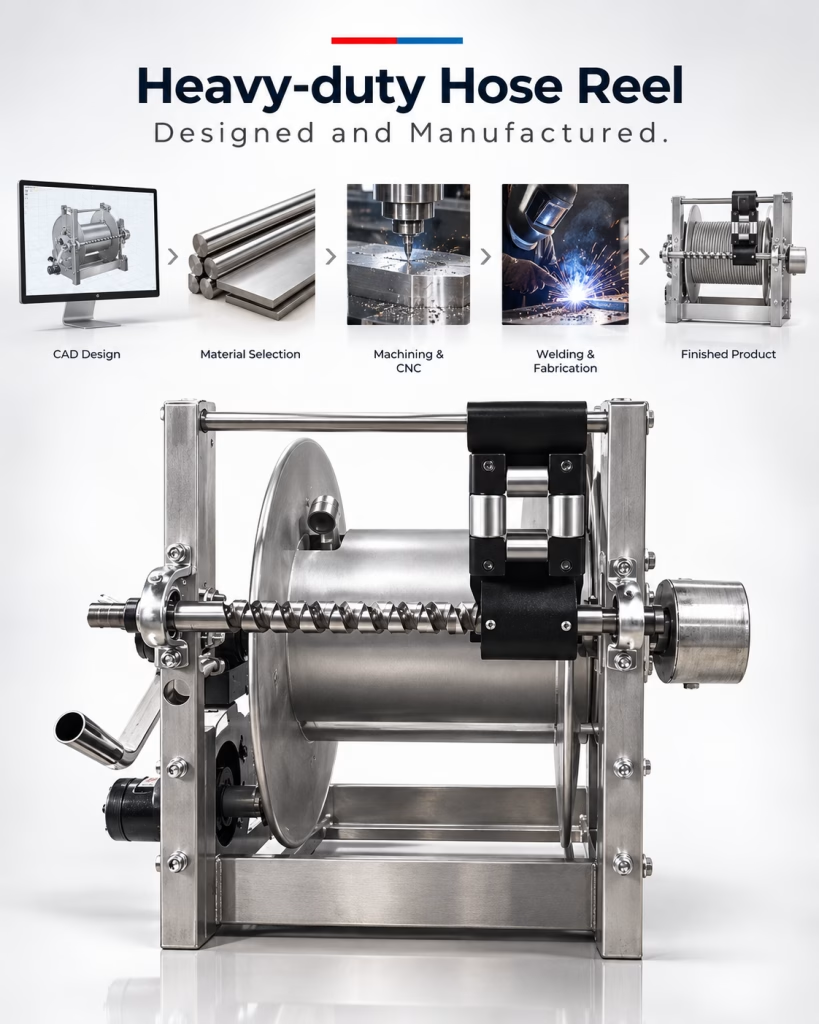
3. CAD Design: Visualizing the Reel Before Manufacturing
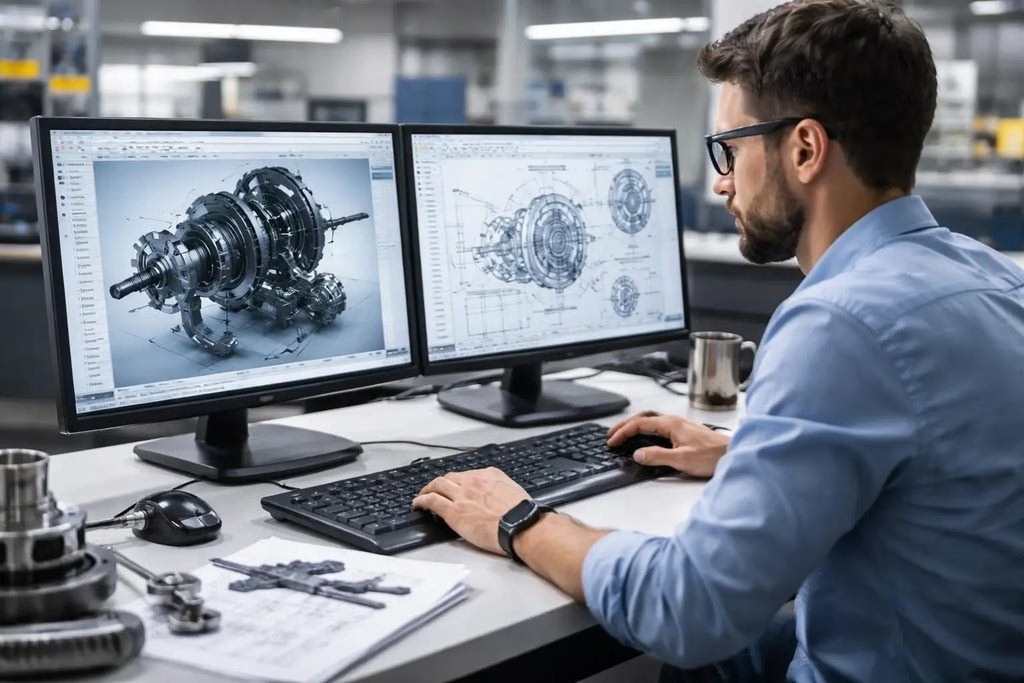
Computer-Aided Design (CAD) plays an important role in developing custom industrial equipment.
Using CAD systems, a design can be developed and reviewed digitally before components move into production.
This allows important dimensions, component arrangements, mounting positions and clearances to be evaluated during the design process.
For custom hose reels, CAD can help with:
- Developing reel dimensions
- Designing structural components
- Planning mounting arrangements
- Positioning fluid-path components
- Reviewing hose routing
- Evaluating component clearances
- Refining specialized configurations
One of the biggest advantages of CAD is the ability to address potential design challenges before manufacturing begins.
It also provides a clearer way to communicate the proposed design and make adjustments when customer requirements change.
Good manufacturing starts with good design.
Taking the time to develop the right configuration can make a significant difference in the finished product.
4. Material Selection: Choosing the Right Construction
Material selection is another important part of the design process.
The appropriate materials depend on the operating environment, structural requirements, fluid compatibility and intended use of the reel.
Different applications may require different material considerations.
Carbon Steel
Carbon steel is widely used in industrial fabrication because of its strength, versatility and suitability for welded structural assemblies.
It can be an effective option for many heavy-duty hose reel frames and fabricated components when properly specified and protected.
Stainless Steel
Stainless steel may be selected for applications where corrosion resistance is an important consideration.
Depending on the grade and environment, it can be suitable for applications involving moisture, washdown or exposure to certain corrosive conditions.
Aluminum
Aluminum can offer advantages where reduced weight and corrosion resistance are desirable.
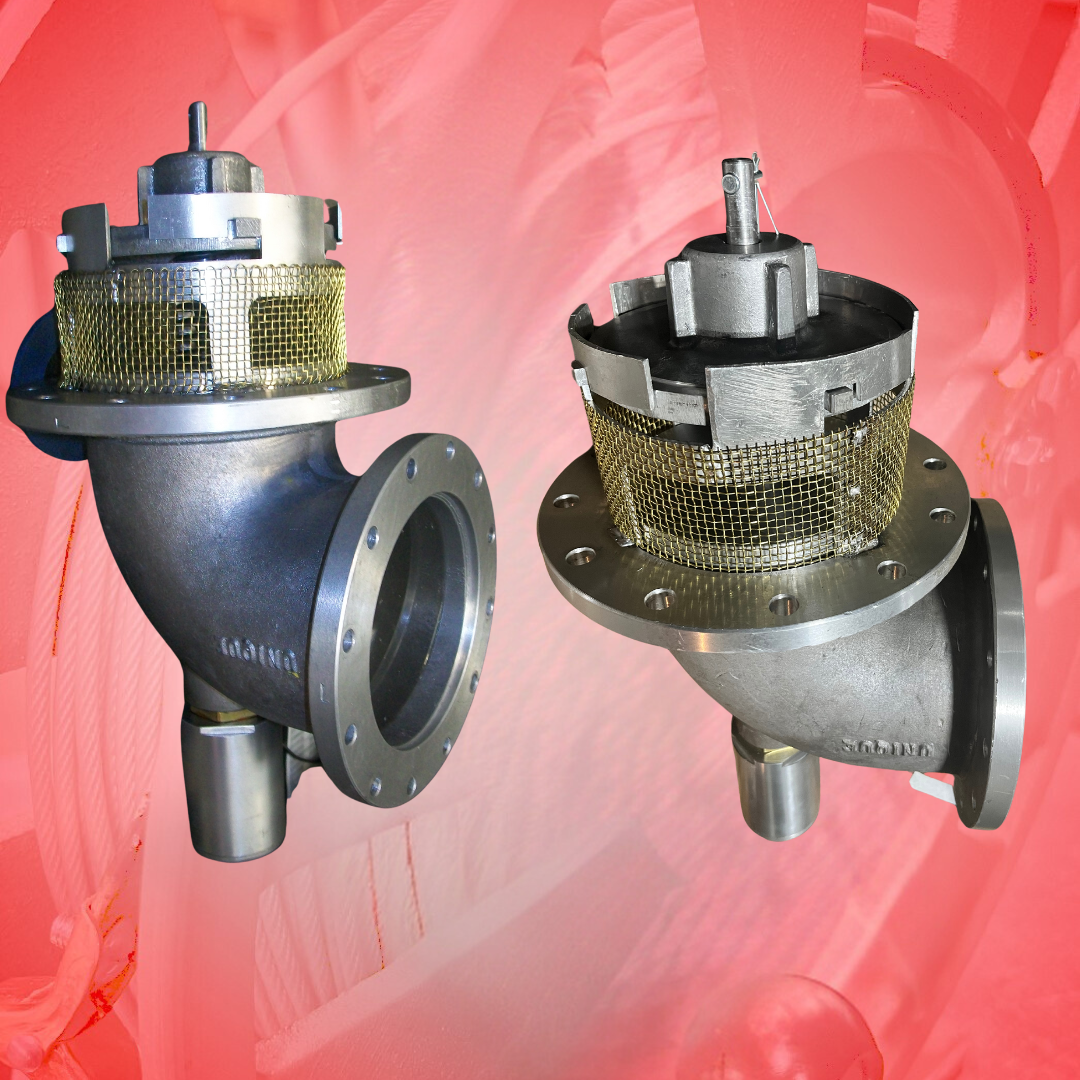
UHR manufactures hose reel configurations incorporating cast aluminum fluid paths for applications where this construction is appropriate.
The important thing is to select materials based on the actual requirements of the application rather than assuming one material is suitable for every job.
5. Machining and CNC: Manufacturing Components to Specification
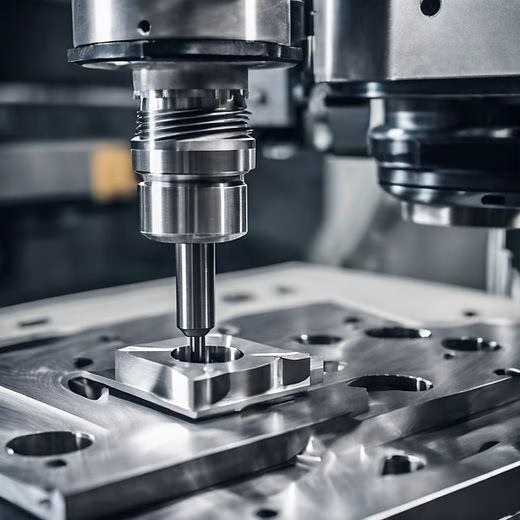
Once the design and materials have been established, manufacturing can move into component production.
Machining and CNC capabilities allow components to be produced to specified dimensions and tolerances.
This is particularly important when manufacturing custom equipment that requires specialized dimensions, connections or component arrangements.
Depending on the design, machining operations may include:
- Turning and lathe work
- Component preparation
- Precision machining
- Drilling and finishing
- Custom connection preparation
- Specialized component manufacturing
Accuracy matters because individual components must fit and function together as part of the finished assembly.
UHR’s in-house machining capabilities help support the production of custom industrial equipment and specialized hose reel configurations.
6. Welding and Fabrication: Building the Structure
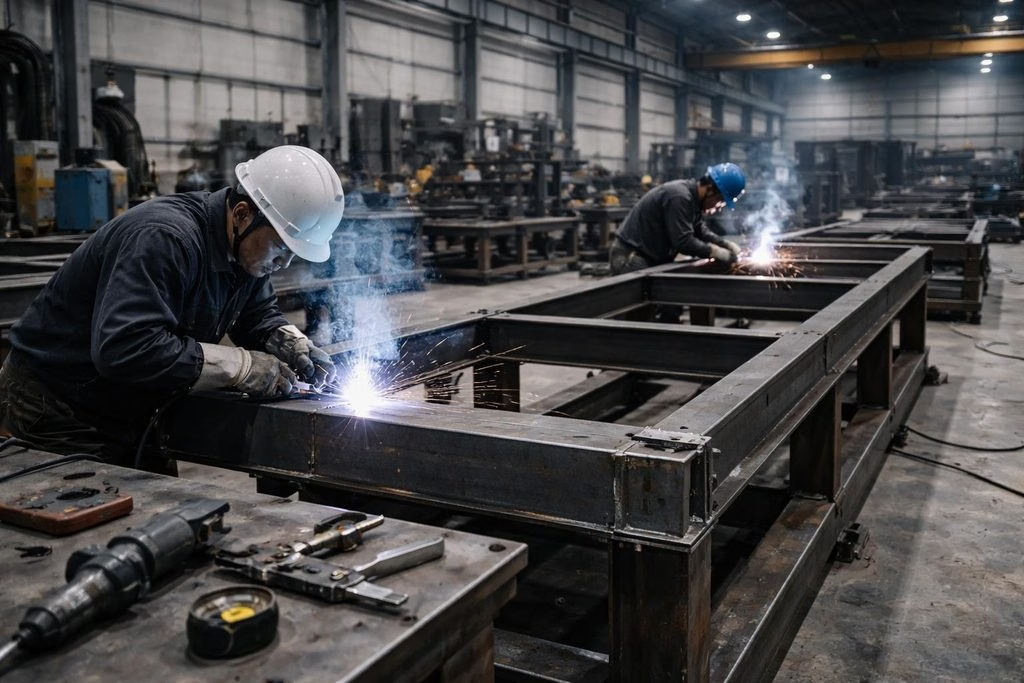
Welding and fabrication are essential parts of many custom hose reel manufacturing projects.
The reel frame and supporting structures need to accommodate the weight of the hose, the reel assembly and the mechanical demands associated with operation.
Fabrication may involve:
- Cutting and preparing materials
- Forming structural components
- Welding frame assemblies
- Manufacturing custom brackets
- Producing mounting structures
- Fabricating specialized components
At Unique Welding & Fabricating, our welding and fabrication capabilities allow us to manufacture components and assemblies around specific customer requirements.
Having these capabilities within the manufacturing operation provides greater flexibility when developing custom equipment.
Instead of being restricted to predefined dimensions or mounting arrangements, the design can be developed around the application.
7. Fluid-Path Manufacturing: Designing for the Product Being Transferred
One of the most important aspects of a fluid-transfer hose reel is its fluid path.
The fluid path is responsible for directing product through the reel assembly and into the connected hose.
It is therefore important that the configuration is appropriate for the fluid, pressure, temperature, connections and operating requirements.
At UHR, we manufacture hose reels with both cast aluminum and fabricated fluid-path configurations.
Cast Aluminum Fluid Paths
Cast aluminum designs offer a practical construction option for applications where the material properties and fluid-path configuration are suitable.
They can be incorporated into specialized industrial hose reel designs for applications such as petroleum and aviation servicing.
Fabricated Fluid Paths
Fabricated fluid paths allow components and connections to be manufactured and assembled around specific application requirements.
This can be particularly useful when a customer requires a specialized configuration that does not fit a standard design.
Regardless of the construction method, the fluid path must be evaluated as a complete assembly.
Important considerations include:
- Operating pressure
- Fluid compatibility
- Flow requirements
- Temperature
- Swivel configuration
- Seals
- Inlet and outlet connections
The pressure rating of the complete fluid path must be appropriate for the intended application.
8. Rewind Mechanism and Component Integration
A custom hose reel also needs the right rewind system.
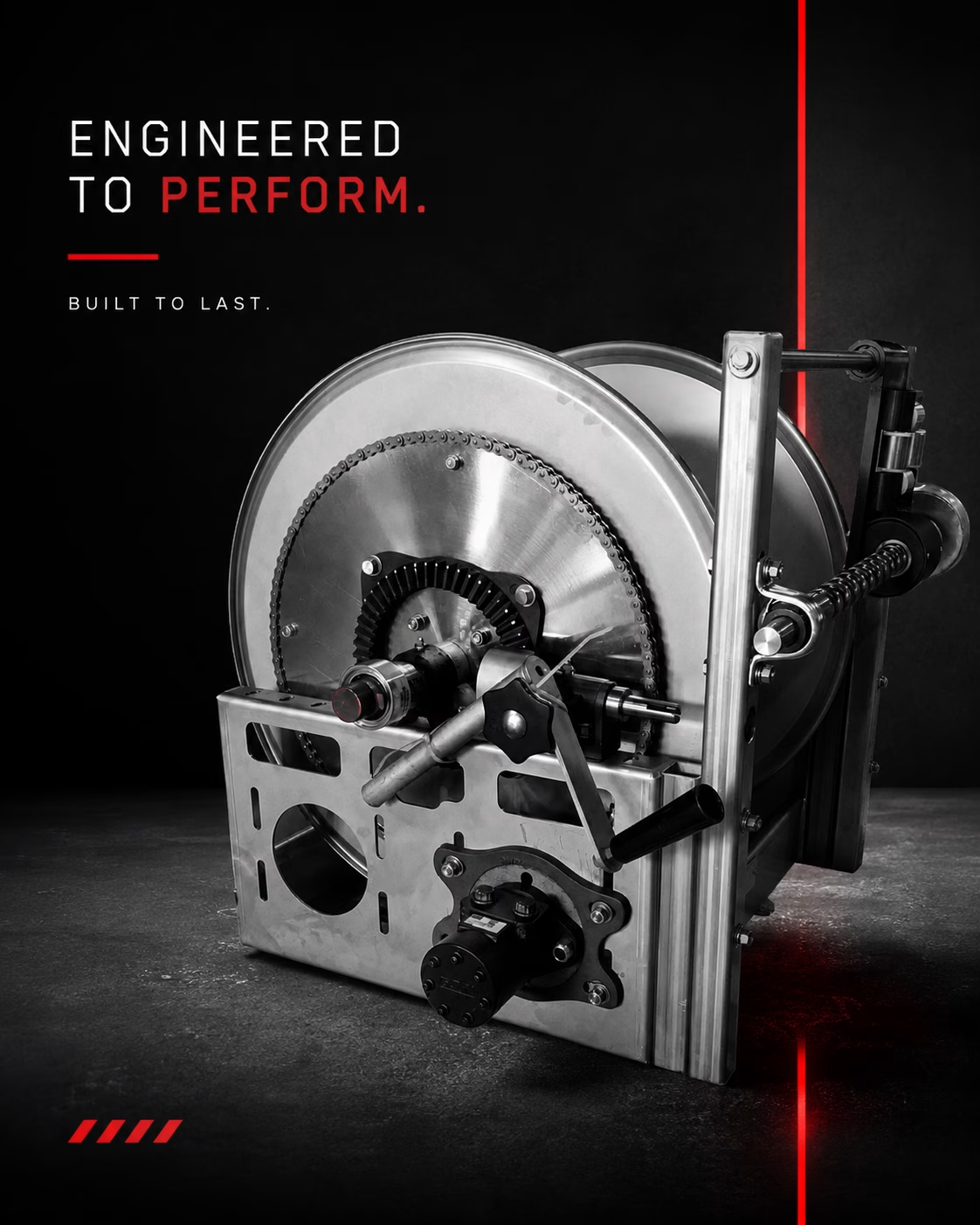
Depending on the application, UHR can manufacture reels incorporating different rewind configurations, including:
- Hand crank
- Spring rewind
- Electric
- Hydraulic
- Air-operated
The correct system depends on the hose size, length, weight, operating frequency, available power source and customer preferences.
During manufacturing, the rewind mechanism must be considered alongside the drum, shaft, frame and other components.
For example, a reel designed for a larger, heavier hose may require a different drive arrangement than one designed for a smaller hose with occasional use.
The objective is to create an assembly where the structural design, fluid path and rewind system work together.
9. Assembly and Final Inspection
Once the individual components have been manufactured, the reel moves into assembly.
This stage brings the different parts of the design together into a finished product.
Depending on the configuration, assembly may involve:
- Installing the drum and frame components
- Integrating the fluid-path assembly
- Installing swivels and connections
- Fitting the rewind mechanism
- Installing bearings and supporting components
- Completing the required finishing work
The completed assembly should then be reviewed against the agreed specifications.
Inspection and any required functional or pressure testing should be established according to the design, applicable requirements and customer specifications.
This is particularly important for specialized fluid-transfer applications where component ratings and system compatibility must be confirmed.
10. A Finished Product Built Around the Customer
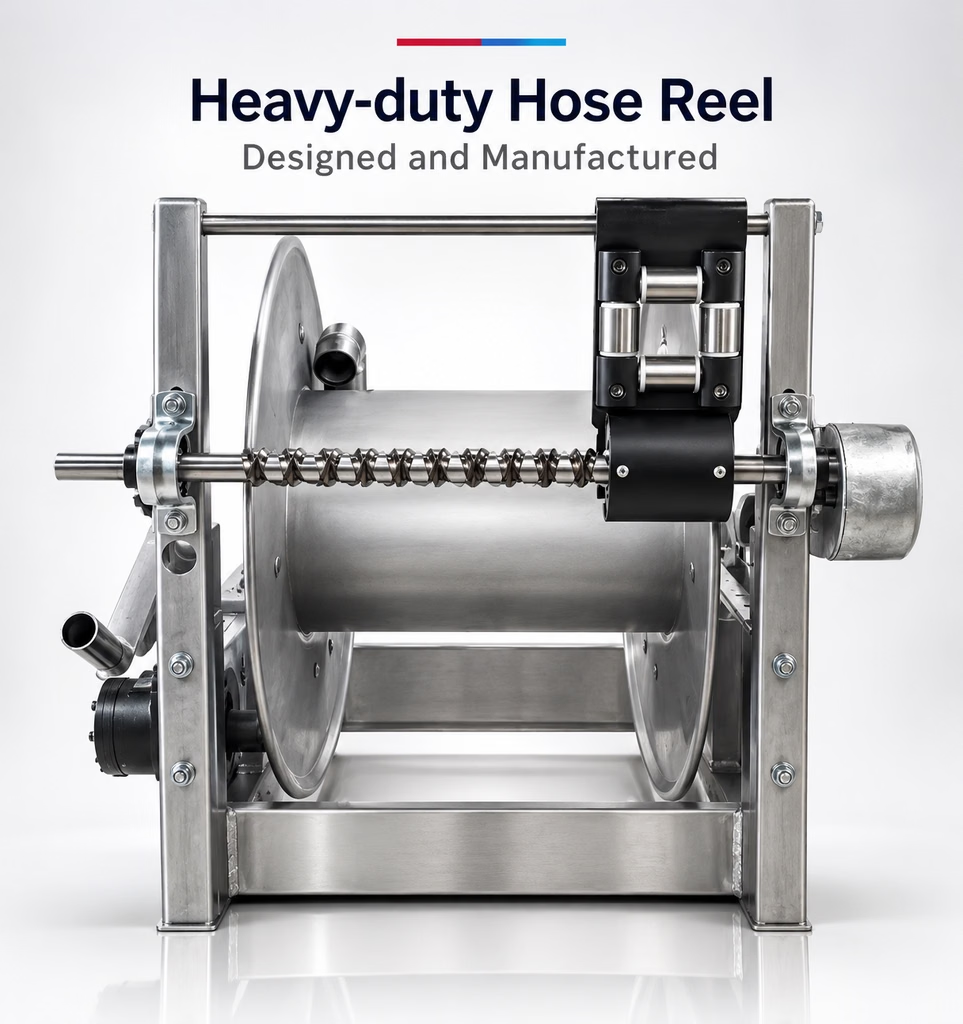
The result of the manufacturing process is more than simply a hose reel.
It is a piece of industrial equipment developed around a specific set of requirements.
A custom hose reel may have different dimensions, materials, connections, fluid paths, mounting arrangements or rewind systems from a standard product.
That flexibility is what makes custom manufacturing valuable.
Rather than asking customers to compromise their equipment requirements to fit a standard configuration, custom manufacturing provides an opportunity to develop a solution around the application.
What Types of Industrial Applications Benefit From Custom Hose Reels?
Custom hose reels can be particularly valuable in industries where equipment requirements vary significantly.
Fuel Delivery and Petroleum
Fuel delivery operations may require specialized hose capacity, fluid paths, connections and vehicle-mounted configurations.
Custom reels can be designed around the requirements of tanker trucks, fuel delivery vehicles and petroleum transfer operations.
Aviation Servicing
Aviation applications can require specific hose dimensions, fluid-path configurations, connections and operating arrangements.
The reel must be suitable for the requirements of the particular fueling or servicing operation.
Sewer Jetting
High-pressure sewer jetting applications can require specialized fluid paths, structural construction and hose capacity.
UHR manufactures custom fabricated dual-fluid-path sewer jetter hose reels for specialized applications, including configurations designed for pressures up to 40,000 PSI.
Fire and Rescue
Fire and rescue applications may involve specialized mounting requirements, hose capacity and deployment arrangements.
Custom manufacturing can help accommodate the available space and equipment configuration.
Industrial Manufacturing and Maintenance
Manufacturing facilities often have unique requirements involving hose routing, available space, fluid transfer and equipment integration.
A custom reel can be designed around the specific layout and operating needs of the facility.
When Should You Consider a Custom Hose Reel Instead of a Standard Model?
A standard hose reel may be perfectly suitable when the application fits an existing configuration.
However, customization is worth considering when you encounter:
- Unusual hose sizes or lengths
- Restricted mounting space
- Specialized fluid-path requirements
- High-pressure applications
- Unique inlet or outlet connections
- Specific material requirements
- Unusual rewind requirements
- Integration with existing equipment
- Specialized operating environments
Custom manufacturing does not always mean designing an entirely new product.
Sometimes a modification to the drum, mounting arrangement, fluid path or connections is enough to create a better solution.
The important part is having the manufacturing and engineering capabilities to evaluate those requirements.
What Information Should You Provide When Requesting a Custom Hose Reel?
If you’re considering a custom hose reel, having the right information available can make the design and quotation process more efficient.
Here is a practical starting checklist:
Application
- What will the reel be used for?
- Is it stationary or vehicle-mounted?
Hose Specifications
- Hose inside diameter
- Hose outside diameter
- Required hose length
- Hose weight
- Minimum bend radius
Fluid Requirements
- Fluid or product being transferred
- Operating pressure
- Temperature range
- Compatibility requirements
Rewind Requirements
- Hand crank
- Spring rewind
- Electric
- Hydraulic
- Air-operated
Installation Requirements
- Available mounting space
- Mounting position
- Required dimensions
- Hose routing
- Connection requirements
Additional Considerations
- Operating environment
- Frequency of use
- Special materials
- Existing equipment
- Other application-specific requirements
The more information available at the beginning, the easier it becomes to determine the appropriate reel configuration.
Frequently Asked Questions About Custom Hose Reel Manufacturing
How are custom industrial hose reels manufactured?
Custom industrial hose reels are manufactured through a process that can include application review, engineering, CAD design, material selection, machining, welding, fabrication, fluid-path manufacturing, assembly and inspection. The exact process depends on the reel’s design and application.
What is the advantage of a custom hose reel?
A custom hose reel can be designed around specific hose dimensions, operating pressures, fluids, mounting requirements, connections and rewind methods. This allows the equipment to accommodate applications that standard reels may not adequately address.
Can a hose reel be manufactured to fit existing equipment?
Yes. Custom hose reels can be designed around existing machinery, vehicles, available mounting space and specific installation requirements. Dimensions, mounting brackets, connections and hose routing can be considered during the design process.
What materials are used to manufacture industrial hose reels?
Common materials include carbon steel, stainless steel and aluminum. The appropriate selection depends on the structural requirements, operating environment, corrosion exposure and application.
Can custom hose reels be designed for high-pressure applications?
Yes. Specialized hose reels can be designed for high-pressure applications when the complete fluid path and associated components are appropriately specified and rated. Pressure requirements must be established during the engineering process.
What rewind options are available for custom hose reels?
Custom industrial hose reels can incorporate hand crank, spring rewind, electric, hydraulic or air-operated mechanisms. The appropriate option depends on the hose, workload, power availability and operating requirements.
How long does it take to manufacture a custom hose reel?
Manufacturing timelines depend on design complexity, material availability, component requirements, engineering work and production scheduling. A manufacturer can provide a more accurate estimate once the application and specifications have been reviewed.
What information do I need to request a custom hose reel?
Start with the hose diameter and length, fluid type, operating pressure, temperature, rewind preference, mounting dimensions and connection requirements. Additional information may be needed depending on the application.
Custom Manufacturing Starts With Understanding the Application
Every industrial operation has its own requirements, and sometimes standard equipment simply isn’t the right fit.
That’s why engineering, machining, welding and fabrication capabilities are so important when developing custom industrial hose reels.
From the initial design and CAD process to component manufacturing, fluid-path configuration and final assembly, every stage contributes to creating equipment suited to the job.
At Unique Hose Reels and Unique Welding & Fabricating, custom manufacturing is more than an additional service. It’s a core part of how we approach industrial equipment.
With experience providing hose reel solutions since 2006, our focus is on understanding customer requirements and developing practical equipment around real-world applications.
Whether you require a specialized fluid path, a unique mounting configuration, a particular rewind mechanism or a completely custom hose reel, we’re equipped to help explore the possibilities.
You bring the application. We’ll help develop the solution.
Contact Unique Hose Reels to discuss your custom hose reel requirements and learn more about our manufacturing capabilities.
Unique Hose Reels | Unique Welding & Fabricating | Custom Industrial Hose Reel Manufacturing | Ontario, Canada